Warehouse Automation Starts with the Bottleneck, Not the Robot
The first question is not which robot to buy. It is which part of the operation cannot perform the way the business needs.
Capability 02 / Movement
Conveyors, sortation, robotics and handling technology can change the economics of a warehouse. Their value depends on one thing: how well they fit the real operation.
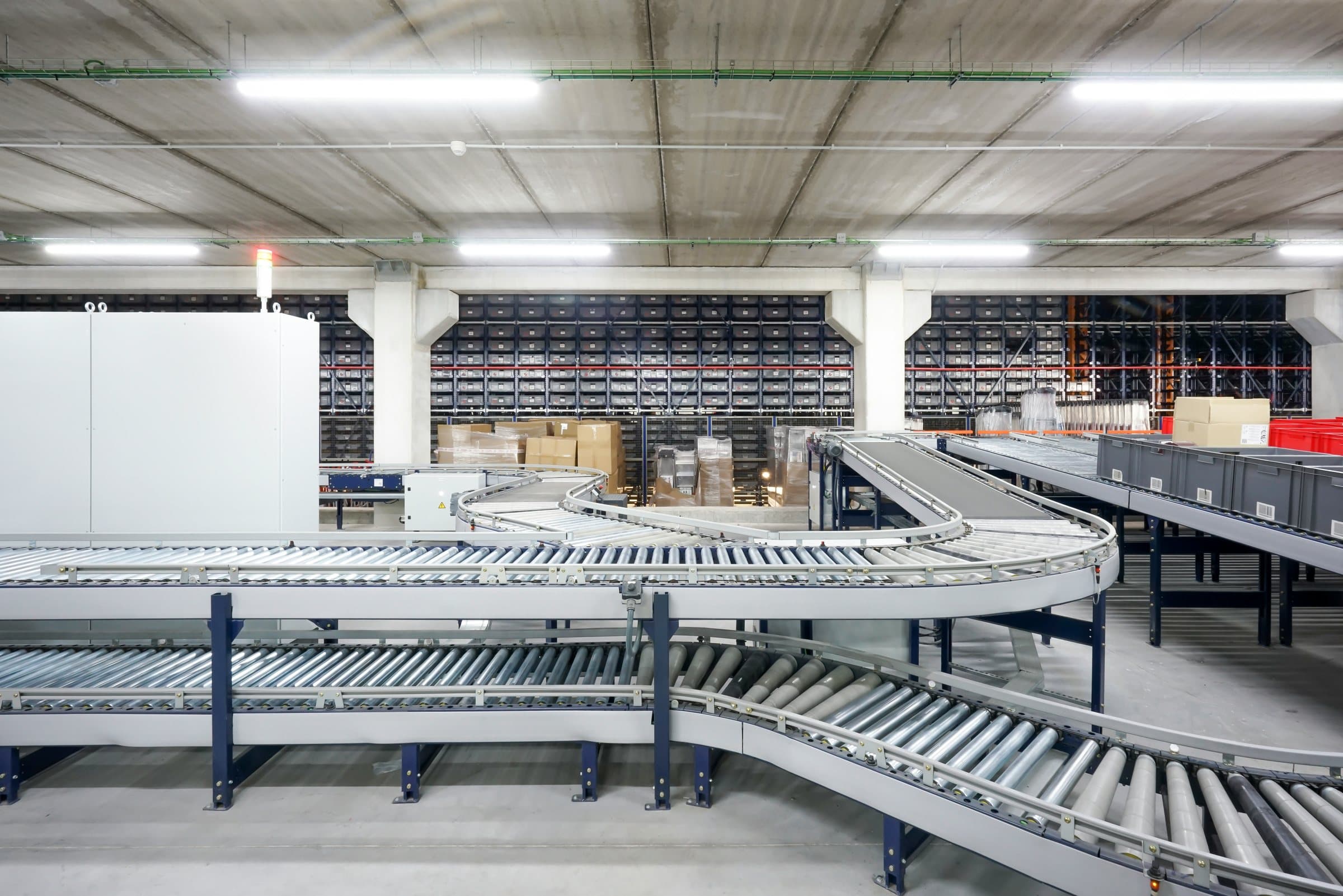
We evaluate repeatable movements, demand variability, space, cycle times, exceptions and the role of people before selecting the equipment concept. That process helps identify where mechanization, advanced automation or a simpler process change delivers the strongest value.
Mechanical design, safety interfaces, equipment controls, warehouse software, commissioning and maintenance access belong in the same conversation. Integration—not the number of machines—is the measure of a coherent design.
Automated equipment produces a constant record of what moved, what waited and what failed. Used well, that record lets AI balance work across zones, flag a section drifting toward a fault and catch exceptions before they reach dispatch. We design the data and control interfaces so those implementations are possible from the first day, not a retrofit.
In one picture
Scope of work
The smartest machine is the one that solves the right problem.
AI, applied
We start with a decision worth improving, check that the data behind it exists, and keep a person accountable for the outcome.
Which product belongs in which location this week?
Depends on Order history, SKU dimensions, location rules
How much work arrives tomorrow, and who is needed where?
Depends on Inbound and order forecasts, task standards, shift data
Which orders should start now, given what the floor can absorb?
Depends on Live queues, equipment states, cut-off times
Is this carton damaged, mislabelled or in the wrong lane?
Depends on Camera or scan data, a defined exception route
Which conveyor section is drifting toward a fault?
Depends on Sensor and controller data, maintenance history
What changed since yesterday, and what should a supervisor look at first?
Depends on Clean operational data, agreed measures, clear ownership
Outcomes
Integration
How this is deliveredThese are systems we design around and integrate. Manufacturer and technology partners are selected to suit each project, and the equipment remains theirs: warranties, safety certification and service arrangements are confirmed project by project.
FAQ
Our model is based on designing integrated warehouse systems and working with suitable equipment and technology manufacturers. The final manufacturer, responsibilities, warranties and service arrangements are confirmed for each project. We do not present third-party products as 4DL-manufactured.
Yes, where it improves a decision the operation makes repeatedly: slotting, labour planning, work release, exception detection, equipment health or reporting. We treat AI like any other system: it needs a defined problem, reliable data, tested interfaces to the WMS and controls, and a person accountable for the result. We do not add it for its own sake.
Both are relevant. Existing facilities often benefit from targeted flow redesign, software improvements or selectively introduced automation. The feasible scope depends on layout, operating constraints and the business case.
We can explore intralogistics and warehouse flow inside industrial environments, but factory production-line engineering and manufacturing equipment are outside our present focus.
Start a conversation
Conveyors, sortation, robotics and handling technology can change the economics of a warehouse. Their value depends on one thing: how well they fit the real operation.