The Critical Decisions Behind a Cold-Chain Warehouse
The earliest design question is the most important one: what conditions must be maintained for each product, and through which operational steps?
Capability 04 / Conditions
Temperature control is critical, but it is not isolated. Door openings, storage density, product movement, monitoring and operator workflows all influence how a controlled facility performs.
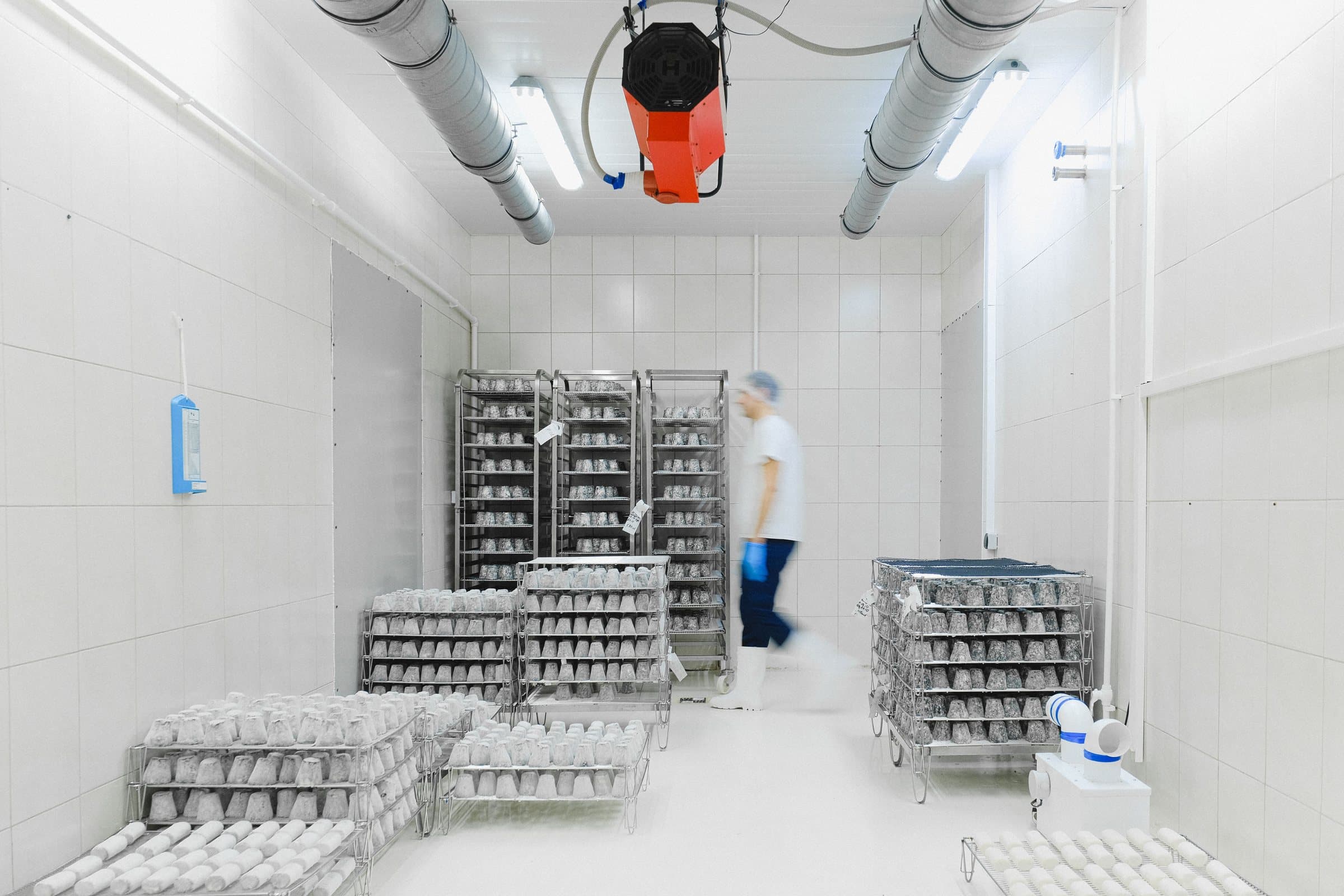
Every category of goods has its own handling and storage requirements. Effective design begins with those requirements, then connects zoning, equipment, throughput, monitoring, contingency planning and operating procedures.
Where specialist refrigeration, food safety, pharmaceuticals, building services or local approvals are involved, qualified experts belong at the table. We help coordinate the warehouse and material-flow perspective within a properly governed project.
In one picture
Scope of work
The cold chain is only as dependable as its weakest handoff.
Outcomes
Integration
How this is deliveredRefrigeration plant, insulated envelopes, food-safety and pharmaceutical quality systems are designed, validated and approved by qualified specialists under the rules that apply to the goods and the location. No single standard covers every case, and we do not promise regulatory outcomes.
FAQ
Cold-chain warehousing is within our focus. Controlled environments require project-specific requirements and appropriate specialist engineering and compliance partners.
Both are relevant. Existing facilities often benefit from targeted flow redesign, software improvements or selectively introduced automation. The feasible scope depends on layout, operating constraints and the business case.
We evaluate projects individually based on geography, complexity, partner availability and regulatory requirements. Contact us with your location and requirements.
Start a conversation
Temperature control is critical, but it is not isolated. Door openings, storage density, product movement, monitoring and operator workflows all influence how a controlled facility performs.